
Asbestos Testing in Lafayette, LA
Before you disturb a suspicious material, testing can confirm whether it actually contains asbestos. Sampling and laboratory analysis are the dependable way to move from a guess to an answer.
When Testing May Be Appropriate
Asbestos testing is worth considering any time you plan to disturb a building material that could contain asbestos, especially in a property built before the late 1980s. Testing gives you a clear answer before you commit to a course of action, and it can prevent both unnecessary removal of harmless materials and accidental disturbance of hazardous ones.
Common situations where testing is recommended include:
- Before removing old vinyl or linoleum flooring
- Before scraping or removing popcorn or textured ceilings
- Ahead of demolition of walls, ceilings, or entire structures
- When replacing older heating systems, pipes, or boilers
- Before repairing or replacing older siding or roofing
- When opening up walls that may contain older joint compound
- Before any renovation that will cut into, sand, or break suspect materials
Why Visual Identification Isn't Enough
Asbestos cannot be reliably identified by appearance. The fibers are microscopic and blended into the material during manufacturing, so a floor tile, a ceiling texture, or a section of pipe insulation that looks identical to an asbestos-containing product may or may not actually contain asbestos. Age and product type can raise suspicion, but they cannot confirm it.
This is why testing matters. Guessing based on how a material looks can lead to either overreaction, removing something that was harmless, or underreaction, disturbing something that should have been handled with care. Laboratory analysis removes that uncertainty.
How Sampling Works
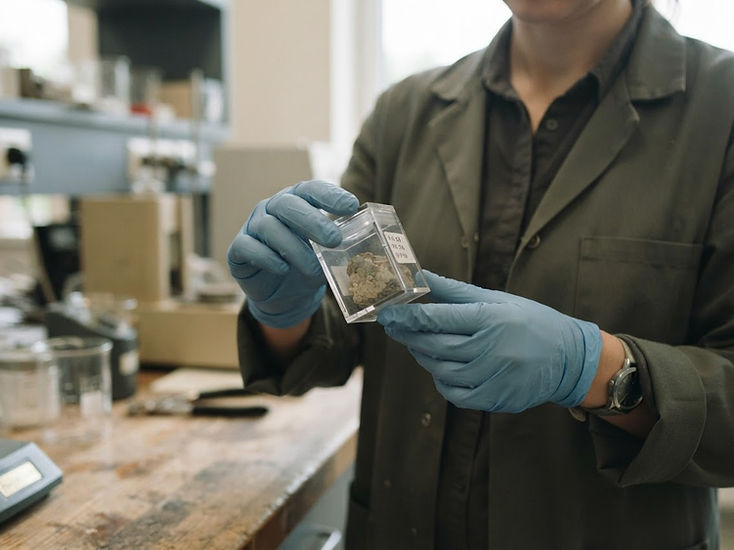
Sampling involves taking a small representative portion of the suspect material in a controlled way that avoids unnecessary fiber release. The sample is then sent to a laboratory for analysis, where it is examined to determine whether asbestos fibers are present and, if so, what type.
Because sampling itself involves disturbing the material, it should be done carefully and with appropriate precautions. In many cases, a small number of samples is enough to characterize a material across a room or a building, but the sampling plan depends on the material and the scope of the project.
Laboratory Analysis
The actual determination of whether a material contains asbestos is made through laboratory analysis, not through a visual inspection on site. Common analytical methods include polarized light microscopy (PLM), which allows a lab to identify the types of fibers present in a sample. The laboratory report indicates whether asbestos was detected and, where applicable, the type and estimated percentage.
A lab result gives you a factual basis for deciding what to do next. If asbestos is confirmed, you can plan removal, encapsulation, or management with confidence. If it is not detected, you can proceed with your project without the controls that asbestos would require.
What Testing Does and Doesn't Tell You
Testing tells you whether the specific material sampled contains asbestos. It does not, by itself, tell you whether that material must be removed, or guarantee anything about materials elsewhere in the building that were not sampled. Each suspect material generally needs its own evaluation, since different materials in the same building can have different compositions.
If you're planning work that will disturb older materials, testing before you start is the most direct way to know what you're dealing with and to plan accordingly.
Planning Work on Older Materials?
Don't guess. Testing confirms what's in your building before you disturb it. Call to arrange sampling for your property.